Thursday, January 10, 2013

Tip & Quote of the Week: Effect & Affect

Going along with the theme of commonly misspelled words, this time it is affect and effect. This is understandable: they look alike and sound alike and mean similar things, but they are not interchangeable.

affect  verb 
 - have an effect on; make a difference to.
touch the feelings of (someone); move emotionally : [as adj. ] ( affecting) 
(of an illness) attack or infect.

effect  noun
1. a change that is a result or consequence of an action or other cause.
used to refer to the state of being or becoming operative.
the extent to which something succeeds or is operative.
[with adj. ] Physics a physical phenomenon, typically named after its discoverer.
an impression produced in the mind of a person.
2. ( effects) the lighting, sound, or scenery used in a play, movie, or broadcast .
3. ( effects) personal belongings .

Found picture here.
“The action is affect; the end result is effect.”
- Barbara Wallraff, Word Court. Harcourt, 2000

Affect as a verb means "to influence", while effect means "to bring about".

Note: Effect is often used in an adjective or noun phrase:
- After effect
- Cause and effect
- Domino effect
- Greenhouse effect
- Personal effects
- Side effects
- Sound effect
- Special effect

Practise using affect and effect in a sentence:

These examples have been taken from news headlines.

1. Smoking legislation to affect drivers

2. 5 Facebook rulings that affect what Canadians can do online

3. Cardamom crops affect forests, studies say

4. Changes in the temperature of foods can affect taste intensity

Test yourself by rewriting these headlines using the word effect.

Sentence #3 has been rewritten about the end results instead of an action and is used as a noun: The effects of cardamom crops are detrimental to tropical forests.
Picture found here.
Affect as a noun

On rare occasions, affect is used as a noun in reference to a person’s mental state or display of emotion.

For example, when speaking about a depressed patient’s emotional response to stimuli you might say they showed a flat affect to stimuli.

Effect as a verb

When used as a verb, effect means having the power to bring about or to accomplish something. This is similar to its meaning as a noun ("end result").

Example: the principal wanted to effect a change in the school’s curriculum.

Picture found here.

Wednesday, January 9, 2013

"Les Misérables (2012)" Movie Review

"Les Misérables" movie poster.
"Based on the novel by Victor Hugo, 'Les Misérables' travels with prisoner-on-parole, 24601, Jean Valjean (Hugh Jackman), as he runs from the ruthless Inspector Javert (Russell Crowe) on a journey beyond the barricades, at the center of the June Rebellion. Meanwhile, the life of a working class girl (Anne Hathaway) with a child is at a turning point when she turns to prostitution to pay money to the evil innkeeper and his wife (Sacha Baron Cohen and Helena Bonham Carter) who look after her child, Cosette (Isabelle Allen). Valjean promise to take care of the child, eventually leads to a love triangle between Cosette (Amanda Seyfried), Marius (Eddie Redmayne) who is a student of the rebellion, and Eponine (Samantha Barks), a girl of the streets. The people sing of their anger and Enjolras (Aaron Tveit) leads the students to fight upon the barricades." Written by JBW (Source below.)
Anne Hathaway (being carried) and Hugh Jackman.
Directed by Tom Hooper ("The King's Speech", "John Adams" TV Mini-Series, "Elizabeth I" TV Mini-Series) and based on the original stage musical by Claude-Michel Schönberg, Alain Boubil, Jean-Marc Natel, and Herbert Kretzmer. The screenplay was written by William Nicholson ("Elizabeth: The Golden Age", "Gladiator", "First Knight") with additional text written by James Fenton.

Russell Crowe.
In the starring role is Hugh Jackman ("The Prestige", "X-Men"). He does an excellent job and I don't think he's getting enough accolades for it. Opposite him is Russell Crowe ("Gladiator", "Master and Commander: The Far Side of the World"), who, though not a singer, holds his own. He wasn't terrible and I think he acted the part rather well. For the record, Javert is my favorite character out of the whole musical. Anne Hathaway ("The Devil Wears Prada", "The Dark Knight Rises") isn't in it for very long, but she is brilliant and will probably win supporting actress come Oscar time.  Though her vibrato bothered me a bit, Amanda Seyfried ("Mean Girls", "Mamma Mia") was also very good. Her character doesn't have too much depth to her so in consideration of that she did well. 

Amanda Seyfried (L)
and Eddie Redmayne.
Sacha Baron Cohen ("Hugo", "Sweeney Todd: The Demon Barber of Fleet Street") and Helena Bonham Carter ("Alice in Wonderful", "The King's Speech"), even though they tried really hard to be funny, it just didn't work for me. Cohen was the only one with a French accent and it was a bad French accent. They were okay, Carter could've sung her parts louder, but her acting was good. Eddie Redmayne ("Black Death", "My Week With Marilyn") was good, but his face shook every time he sung a long note out and that was a bit distracting. Aaron Tveit ("Ghost Town", "Howl", "Premium Rush") was cute and had a great voice, but in comparison to the Enjolras I saw on Broadway (in about 2009) really got me gung-ho about the revolution. Tveit was adorable, but I didn't fall in love with him like I did the one onstage. 

Samantha Barks.
Samantha Barks ("Les Misérables in Concert: The 25th Anniversary") is basically known for being an amazing Eponine onstage so I think she suffers from the same thing that Jackman is going through right now: because everyone knows that she's a great stage actress, she's not getting the praise that is due her way. Daniel Huttlestone was wonderful as Gavroche. He has an excellent voice and was oftentimes singing rings around the other actors in the scene. And Colm Wilkinson ("The Phantom of the Opera at the Royal Albert Hall") was the Bishop that shows Jean Valjean some kindness and helps him to become a better man. He wasn't in it very long but he does an excellent job with his part as well.

"Les Misérables"
movie poster.
The makeup, or rather lack thereof, was brilliant. Everything was done very realistically. You saw how dirty, disgusting and sick everyone was. Also, everything seemed historically accurate which is something that can't always be shown in a musical stage production. The clothes were very good. I still don't think it's going to win "Best Picture" though. Because of the way they filmed everything, they had to keep very close to the actors. The actors were really singing while they were being filmed. This is what people actually sound like when they sing. 

Russell Crowe.
I had to watch this musical two times before I could write a review (damn people!). If you know the musical, you will notice that they cut some parts out and put some parts in. Most of it doesn't matter to the overall movie. I really liked how they humanized Javert. This wasn't something that could be done onstage. He was obviously changed by the end of the movie.

Also, Lisa Schwarzbaum: who the hell watches a movie musical when they don't even like musicals?!

I would like to read the book one day. I read an abridged version in high school some years ago, but the only part I remember is when Eponine is helping some old guy water his flowers while spouting off revolutionary, political jargon. 

Also, this review, featuring Sourcefed's Meg and Trisha:

Friday, January 4, 2013

WGA 2013 Best Screenplay Nominations!!!

"Flight" movie poster.
Poster found here.
This year’s WGA screenplay nominations have been announced:

ORIGINAL SCREENPLAY:

- Flight, Written by John Gatins; Paramount Pictures

- Looper, Written by Rian Johnson; TriStar Pictures
Poster found here.
Picture found here.

- The Master, Written by Paul Thomas Anderson; The Weinstein Company

Moonrise Kingdom, Written by Wes Anderson & Roman Coppola; Focus Features

Zero Dark Thirty, Written by Mark Boal; Columbia Pictures


"The Master" movie poster found here.

"Argo" movie poster.
Poster found here.
ADAPTED SCREENPLAY:

- Argo, Screenplay by Chris Terrio; Based on a selection from The Master of Disguise by Antonio J. Mendez and the Wired Magazine article “The Great Escape” by Joshuah Bearman; Warner Bros. Pictures

- Life of Pi, Screenplay by David Magee; Based on the novel by Yann Martel; 20th Century Fox

"Lincoln" 
movie poster.
"Silver Linings Playbook"
movie poster.
- Lincoln, Screenplay by Tony Kushner; Based in part on the book Team of Rivals: The Political Genius of Abraham Lincoln by Doris Kearns Goodwin; DreamWorks Pictures

Silver Linings Playbook, Screenplay by David O. Russell; Based on the novel by Matthew Quick; The Weinstein Company

The Perks of Being a Wallflower, Screenplay by Stephen Chbosky; Based on his book; Summit Entertainment
"The Perks of Being A Wallflower" movie poster.

"The Central Park Five"
movie poster found here.
"The Invisible War"
movie poster found here.
DOCUMENTARY SCREENPLAY:

The Central Park Five, Written by Sarah Burns and David McMahon and Ken Burns; Sundance Selects

The Invisible War, Written by Kirby Dick; Cinedigm Entertainment Group

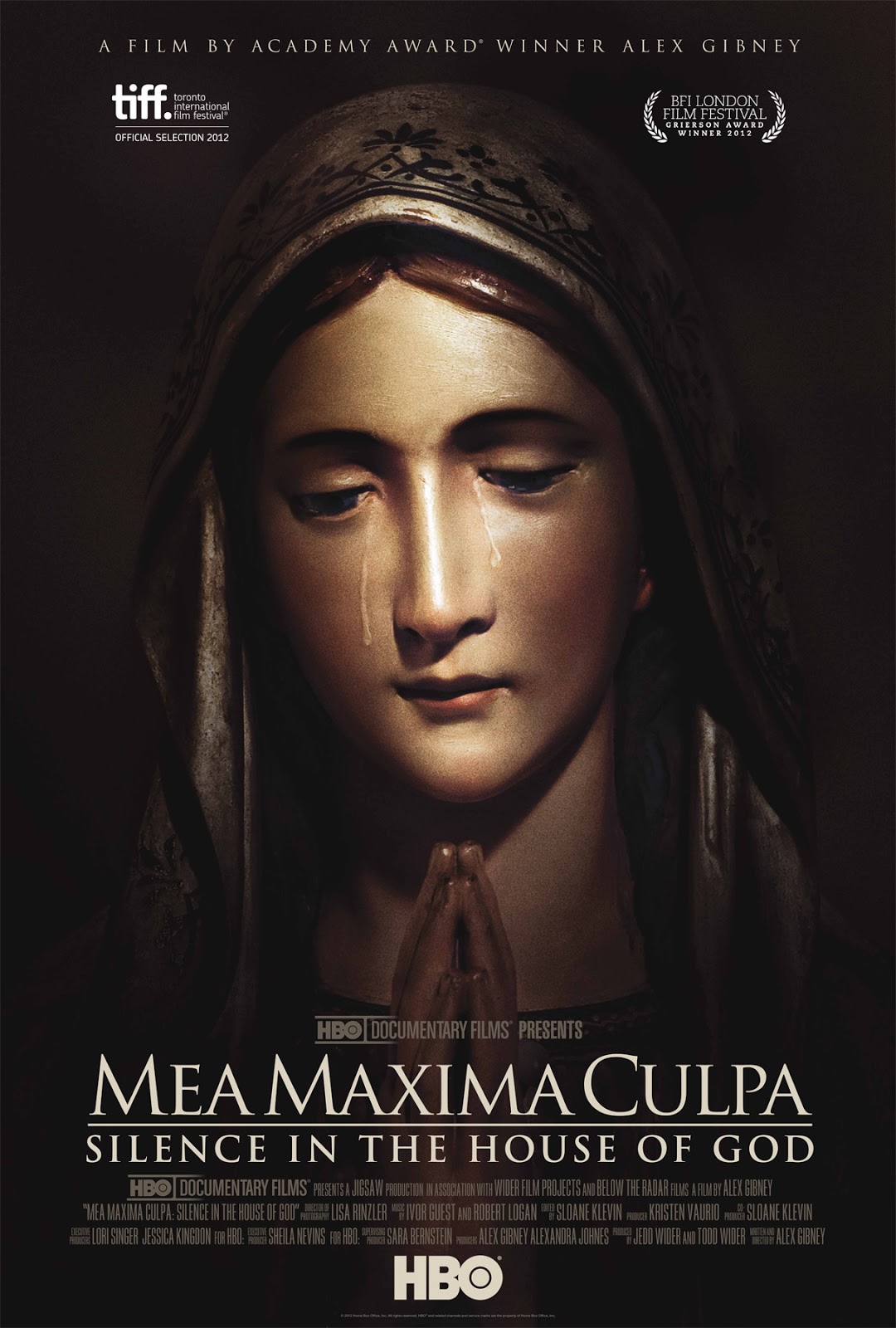
Mea Maxima Culpa: Silence in the House of God, Written by Alex Gibney; HBO Documentary Films

"Mea Maxima Culpa"
movie poster.
"We Are Legion"
movie poster.
Searching for Sugar Man, Written by Malik Bendejelloul; Sony Pictures Classics

We Are Legion: The Story of the Hacktivists, Written by Brian Knappenberger; Cinetic Media

West of Memphis, Written by Amy Berg & Billy McMillin; Sony Pictures Classics

"West of Memphis"
movie poster.
"Searching for Sugar Man"
movie poster.


Congratulations, writers!

Originally posted here: http://gointothestory.

Wednesday, January 2, 2013

Tip & Quote of the Week: There, They're & Their

This sounds obvious, but it is worth going over again. When giving your script to an agent or producer may mean a career, everything needs to be precise and correct.


"I hate people who mix up 'there, their and they're'. It's worse than not knowing the difference between your left and write." 
Anonymous

When you speak, 'there', 'their', and 'they're' sound exactly alike. However, these words mean different things and are spelled differently.

'They're' means 'they are'

'There' refers to a place

'Their' is a possessive adjective

Use there when referring to a place, whether concrete ("over there by the building") or more abstract ("it must be difficult to live there").

There is an antique store on Camden Avenue.

The science textbooks are over there on the floor.

There are many documents that are used in investigations.

Also use there with the verb BE (is, am, are, was, were) to indicate the existence of something, or to mention something for the first time.

There is a picnic area over here, and a monster and a campground across the river.

"I see there are new flowers coming up in your garden." 
"Yes, they are the ones my grandmother gave me last year."
Got this picture here.
Use their to indicate possession. It is a possessive adjective and indicates that a particular noun belongs to them.

My friends have lost their tickets.

Their things were strewn about the office haphazardly.

Remember that they're is a contraction of the words they and are. It can never be used as a modifier, only as a subject (who or what does the action) and verb (the action itself).

Hurry up! They're closing the mall at six tonight!

I'm glad that they're so nice to new students here.

Test your usage. When you use any of these three words, get in the habit of asking yourself these questions, but remember that they will not work in all cases though:

If you wrote there, will the sentence still make sense if you replace it with here
If so, you're using it correctly.

If you chose their, will the sentence still make sense if you replace it with our
If so, you've chosen the correct word.

If you used they're, will the sentence still make sense if you replace it with they are
If so, you're on the right track!

Recognize incorrect examples and learn from the mistakes. By looking over others' work with a critical eye, especially by offering proofreading or copyediting help, you can become more sensitized to correct usage and practice it yourself.

Wrong: Their is no one here.

Wrong: Shelley wants to know if there busy.

Wrong: The dogs are happily chewing on they're bones.

RIGHT: I can't believe they're leaving their children there, alone!

Practice, practice, practice! Get your English teacher or friend to say several sentences aloud that include one of these three words and write down which version they are using. Hire a private English tutor if you're still having trouble.

Also, here are two quizzes you can take for fun:

Got this picture here.

Tuesday, January 1, 2013

Essay of the Month: The Elements of a Story

This is something that I decided to do for the blog; that on the first day of every month I will post a little something I like to call "Essay of the Month". "Essay of the Month" is a detailed and researched blog entry describing character development, narrative, and the elements of storytelling.

There is a lot to go over, but for right now, I'm going to keep it pure and simple: The Elements of a Story.

I'm starting off with the most basic of story writing lessons: how to go from the innocent beginning, to a conflicted middle, and thought-provoking and (hopefully) satisfying ending.

Picture taken from here.

Plot: What Happens in the Beginning, Middle and End?

Plot noun "Also called storyline. the plan, scheme, or main story 
of a literary or dramatic work, as a play, novel, or short story."(Source #2)

Plot involves every other element, or the story cannot be told. Without "conflict", you just have a bunch of characters doing nothing. Without "character", you just have an issue that cannot be resolved.

"The plot is the action, the series of events in the story that help move the characters forward to resolve their conflict(s). When conflict enters a character's world, the plot is catapulted." (Source #3)

Picture taken from here.
Also called 'exposition', the 'beginning' is where everything is set up: you have a place, a time or time period, characters that will meet and conflict ensues. The characters are usually the source of the conflict. Maybe they don't like each other for whatever reason - it has to be a pretty strong reason or the story will fall flat. Although other characters don't have to be the conflict in the story. Maybe the main character decides to embark on a journey of self-discovery and there is no one to blame but themselves.

The 'middle' is the basis of the story and it will take up most of the action. This part is called 'rising action'. At this point in the story the action should be getting more exciting: maybe the character moves to another place or finds another character that is on his side. It is where characters face more problems, may defeat some problems that create other more difficult problems, and develop in some way. 

In the middle of the 'middle', there is a 'climax'. But if you are smart, you won't place that in the exact middle of the story. But don't mistake it as the conclusion. It is the part where the main character is forced into making a 'crucial decision' that will decide the outcome for that character. It should be the impetus that pulls the story forward into the 'resolution'.

The 'resolution' is where everything is, literally, resolved. Maybe the main character realizes he's in love and finds the girl of his dreams and they decide to make it work. Or maybe the main character has just defeated the evil overlord of the story. Most parts of the story are answered here, but not all of them.

After the 'resolution' comes the 'ending'. This is the part where everything is decided or finalized. Not everything has to be finalized. You can leave some very select pieces of the storyline unfinished if that is best for the story. But for the most part, everything has a conclusion: the bad guy is dead or at least defeated, the main character falls in love or achieves some aim he had in the 'beginning'.

Depending on how well written the 'denouement' is, people who are watching the story may think that the movie or story could've ended before this part, right at the end of the 'resolution' period. Which is fine. A lot of stories work this way and most movies do as well.
Picture taken from here.
A lot of people feel as though this diagram of the plot is a more correct visual representation of the story. It is because the 'conclusion' is not on the same space occupied by the 'exposition' or the 'beginning' of the story. And it shouldn't be, because even though things have seemingly gone back to the way things were before the story was told, i. e. back to normal, it is not the same as it was before. Changes have happened to the main character and to those closest to him. 

Setting: Where is this Happening?

Setting noun "the locale or period in which the action 
of a novel, play, film, etc., takes place." (Source #2)

You can place the characters and their problems anywhere, but they have to be somewhere. Also, it helps if the setting influences the character. Like if they're originally from the country and they move to the big city, or vice-versa.

Character: Who is this Happening To?

Character noun 
1. the aggregate of features and traits 
that form the individual nature of some person or thing.
2. one such feature or trait; characteristic.
3. moral or ethical quality.
4. qualities of honesty, courage, or the like; integrity.
5. reputation. (Source #2)
6. a person or persons who populate a story 
(and should have a few, if not all, of the above).

I like the definition provided by Theatre: Its Art and Craft: "the representation of the personalities in action." (Source #4)

These people make up your story. Make them interesting.

Conflict: What are the Problems Faced in the Story?

Conflict verb (used without object)
1. to come into collision or disagreement; 
be contradictory, at variance, or in opposition; clash. 
2. to fight or contend; do battle. (Source #2)

Conflict noun
3. a fight, battle, or struggle, especially a prolonged struggle; strife.
4. controversy; quarrel: conflicts between parties.
5. discord of action, feeling, or effect; antagonism or opposition, 
as of interests or principles: a conflict of ideas.
6. a striking together; collision.
7. incompatibility or interference, as of one idea, desire, event, or activity 
with another: a conflict in the schedule. (Source #2)

It goes without saying that without conflict you don't have a story. There is nothing to tell. There may be characters, but they don't do anything: they don't grow, learn what strengths they have, find a lover, or change in any way. So they won't be affecting the audience. 

The conflict should be able to motivate someone, like the main protagonist to get off his keister and do something that challenges himself in some way.

Theme: What is the Underlying Message of the Story?

Theme noun 
1. a subject of discourse, discussion, meditation, or composition; 
topic: The need for world peace was the theme of the meeting.
2. a unifying or dominant idea, motif, etc., as in a work of art.

You can develop a theme based around the conflict. It can be morally or politically charged. It could be simple, like don't be a bad guy and try to take over the world while Superman is around.


Everything is up to you. Be creative and have fun. Many projects are made based around its ability to make money, but you only show your best stuff if you do it for you.

Also, for your enjoyment, this video about the elements of a story courtesy of Flocabulary's Youtube channel:


Tell me what you think in the comments below: did you like what you read? What would you like to read about later?

Sources:
- #1- http://teachers.saschina.org/dcole/2008/04/08/story-elements/
- #2 - http://dictionary.reference.com/browse/plot?s=t
- #3 - http://christiewrightwild.blogspot.com/2012/05/story-element-3-plot.html
- #4 - Archer, Steven, Cynthia Gendrich and Woodrow Hood. Theatre: Its Art and Craft. 5th Ed. San Diego, CA. Collegiate Press. 2003. Pg. 60.